Robotic scouts for the south pole: NASA’s PROMISE rover sets a course
12 November 2026

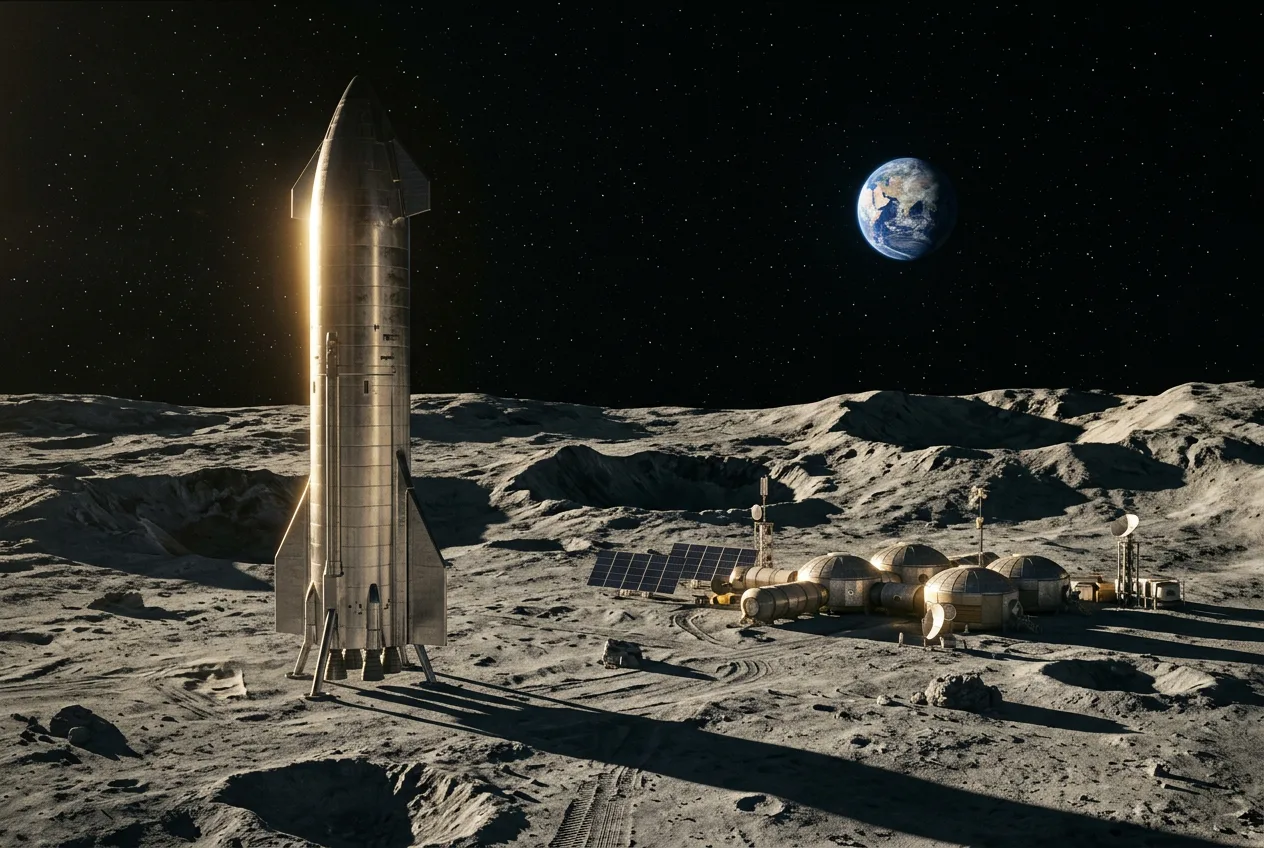
Image: Illustration created with AI
NASA’s 7 November announcement names PROMISE, a nuclear-powered rover planned as a late‑2028 target to probe dark south‑pole terrain and assess resources; Blue Origin holds a $94M base contract with a $140M performance option.
On 7 November NASA outlined a concrete step for “Life on the Moon”: a mission focused on the lunar south‑polar environment. The agency presented a rover, lander and a clear operational aim — to explore areas where sunlight is scarce and to gather the kind of data planners need before people and long‑term infrastructure arrive.
The rover, PROMISE (Polar Rover for Observation, Mapping, and In‑Situ Exploration), is intended to investigate both surface and subsurface terrain, assess resources and help inform future infrastructure and exploration. Its nuclear power source is designed to let it operate through the long lunar night and in permanently shadowed regions, including areas thought to harbour water ice.
NASA named Blue Origin as the contractor to deliver PROMISE with a Mark 1 lander under a base contract of $94 million, with a further $140 million available as an option tied to performance. The agency says the mission is planned to launch in late 2028, and describes that schedule as a target rather than a confirmed launch date.
For those of us thinking about life and work on the Moon, the announcement offers a tangible glimpse of what will be required: robotic scouts able to range into dark, cold terrain ahead of human activity. NASA frames the mission as part of an effort to establish a sustained lunar presence, while the announcement makes clear it does not yet specify when astronauts will use the rover’s findings or what the mission will ultimately discover.